As far as the notion of donating to a museum is concerned, if
you were interested I'm presently recommending the Research
Library of the Wings Over the Rockies Air & Space Museum
in Denver. In general a research library is probably
preferable to a museum as such, since documents have very
little sex appeal when considered as display items, but may
be profitably viewed for research if properly
supervised. The Virtual AGC project has no affiliation
with the museum, but has received very significant help from
the Research Library in the past, and that is the basis for
my recommendation. Obviously, there are many other fine
institutions which deserve consideration as well, if you have
some personal preferences in that regard.
Sadly, an important point to consider about shipping
documents, is that there is a non-zero probability that they
will be lost in transit, even if they are shipped by the
safest feasible means. The most popular methods of
shipping in the U.S.—namely FedEx, UPS, and the USPS—do not
publish their shipping-loss rates. If you google this
question, you'll find any number of meaningless personal
rants about lost packages, demonstrating that one or more of
these shippers are terrible. However, somebody got the
bright idea of looking at the insurance rates being charged,
and estimating the loss rates from the insurance
charges. On this basis, one can conclude that FedEx and
UPS are roughly equivalent to each other, and that either of
them is perhaps twice as good as the USPS. Alarmingly,
though, the package-loss rate would appear to be on the order
of 1%. By "on the order of", I don't mean exactly 1%;
perhaps it is 2% or 0.5%. But it is probably less than
10% and greater than 0.1%. (Figure it out for
yourself: FedEx and UPS charge something like $0.32 per
each $100 of insurance. So they must expect something
like a 0.3% loss.)
Now, when you're shipping a commercial item the loss rate
doesn't really matter, because if you insured the object
properly then in the worst case all you have to do is to
order another one. But when you're shipping a
one-of-a-kind object, you can't just order up a new
one. No amount of insurance can compensate for the
loss. So that's something you'll want to consider if
you decide to ship your documents to me.
And speaking of insurance, how much is reasonable?
Well, recent activity on eBay suggests that a typical Apollo
Program document may be worth about $300, so that's the
number I'll arbitrarily use when shipping items back to you
unless instructed otherwise.
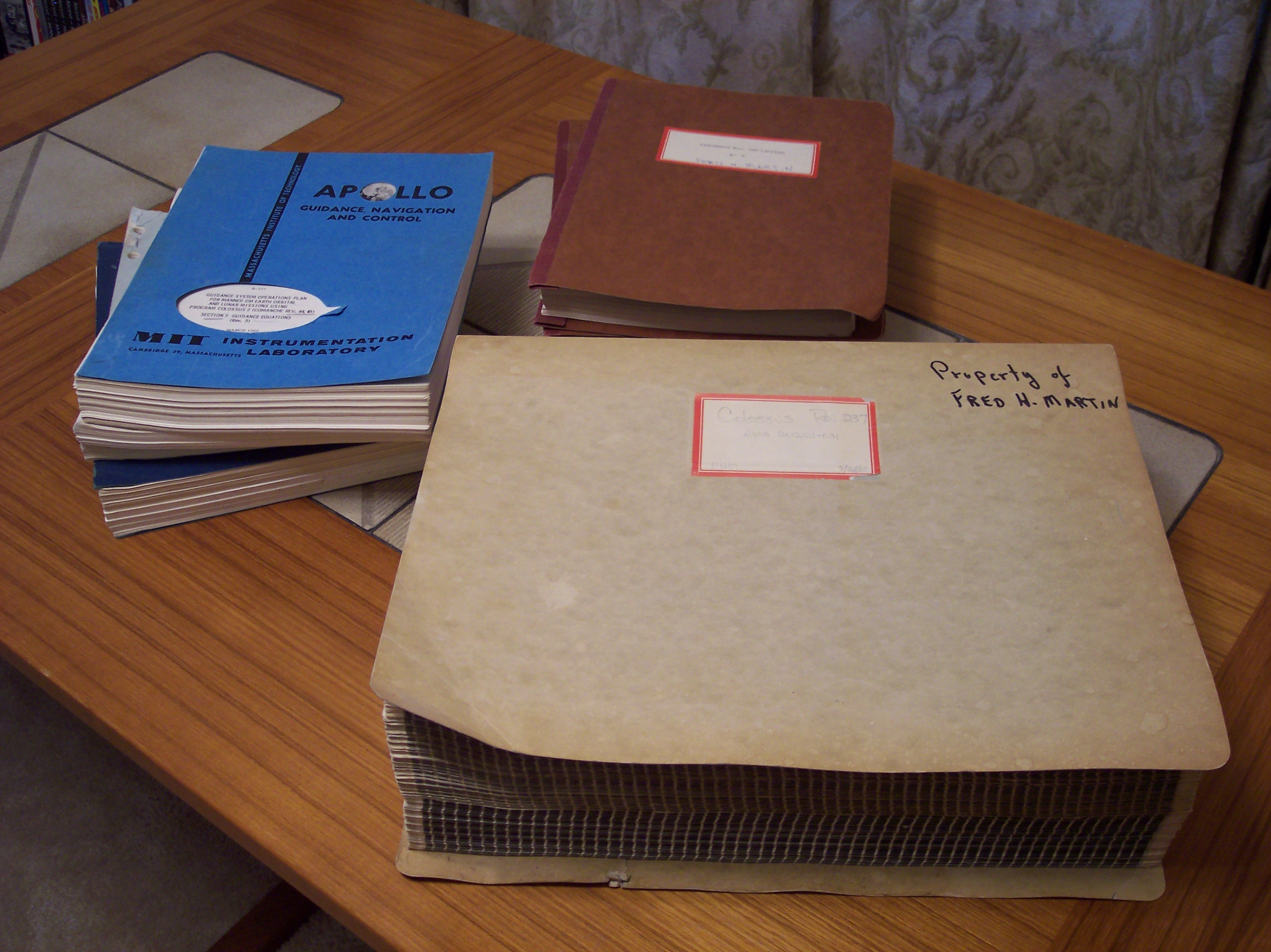
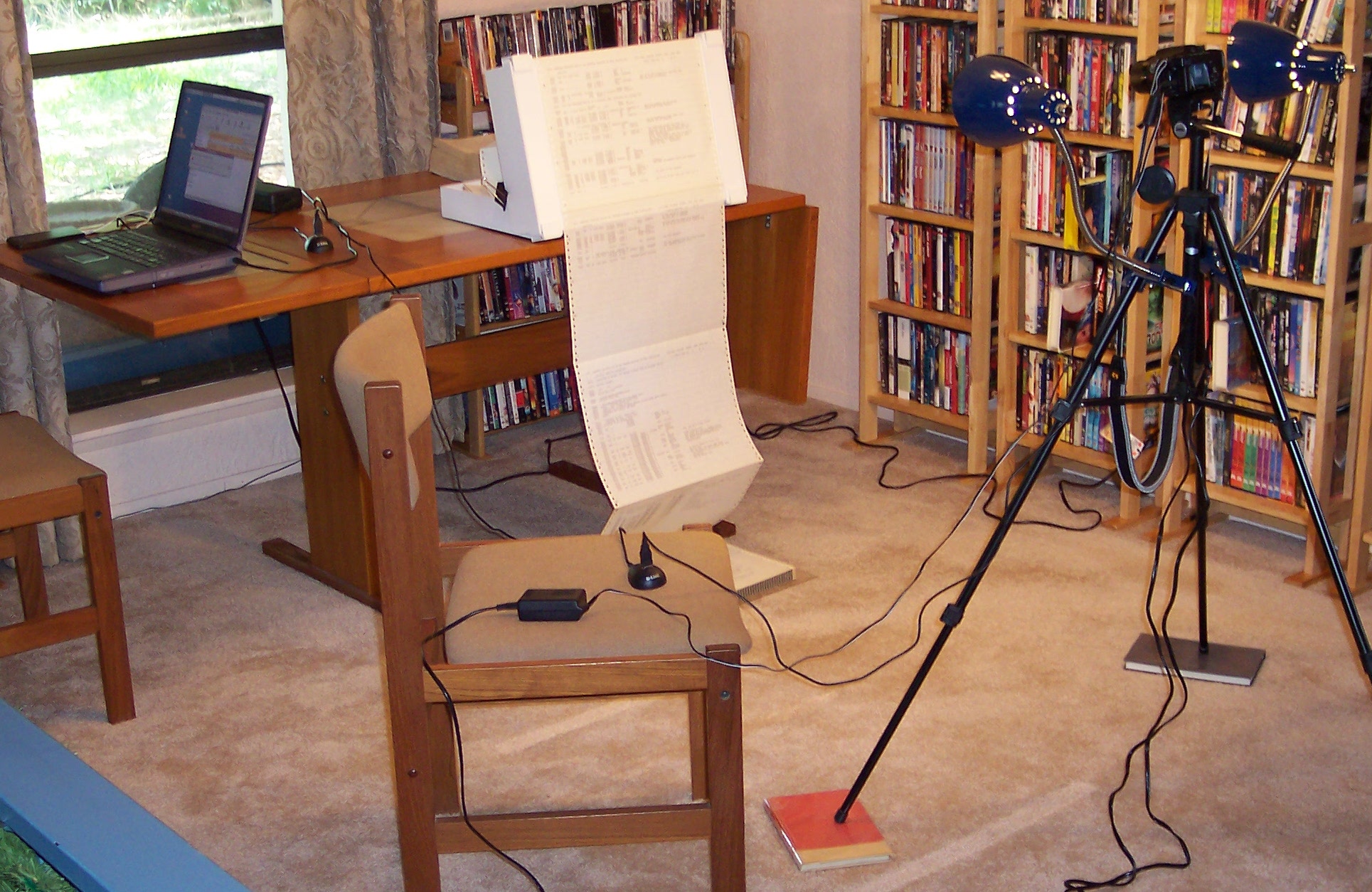
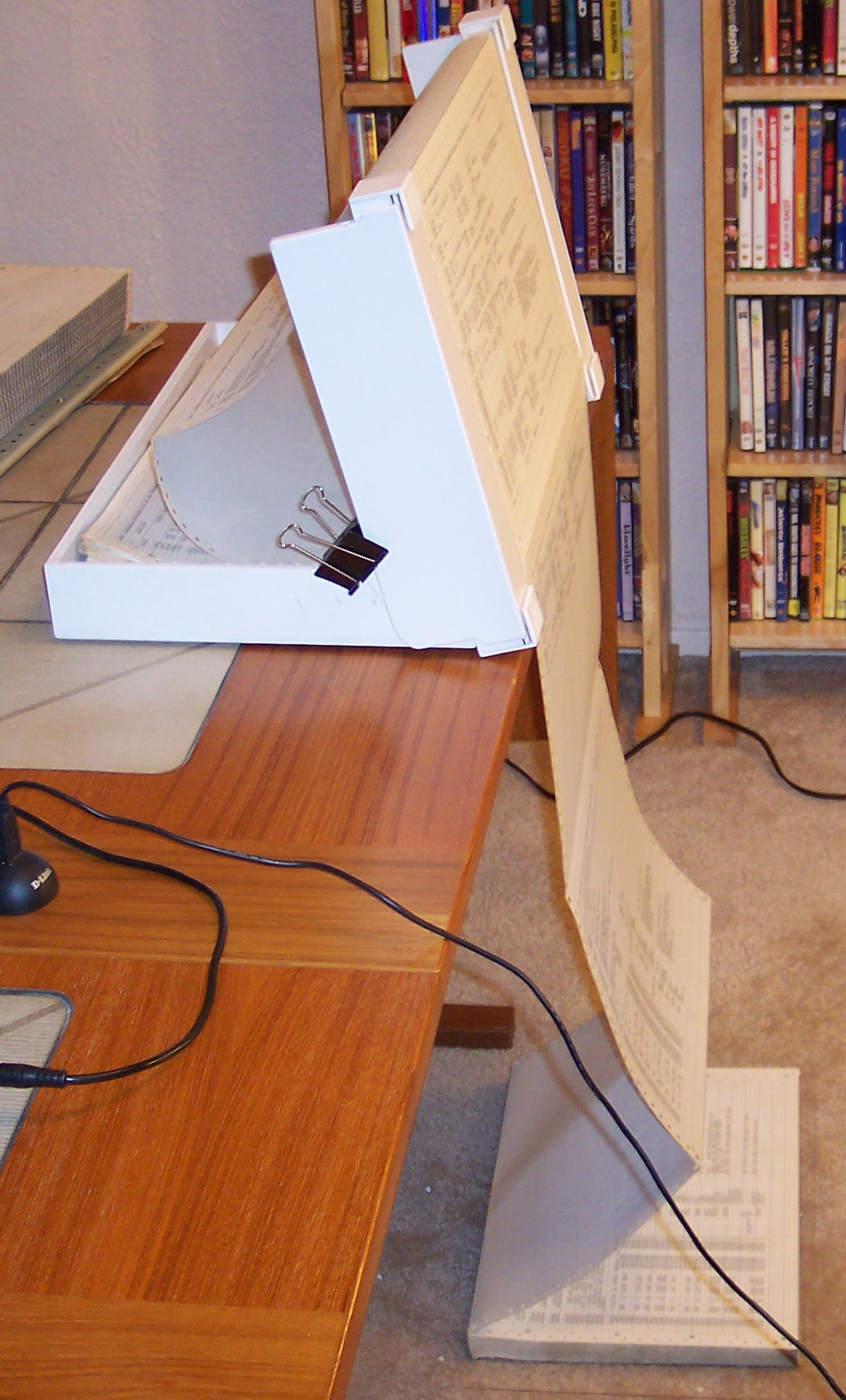
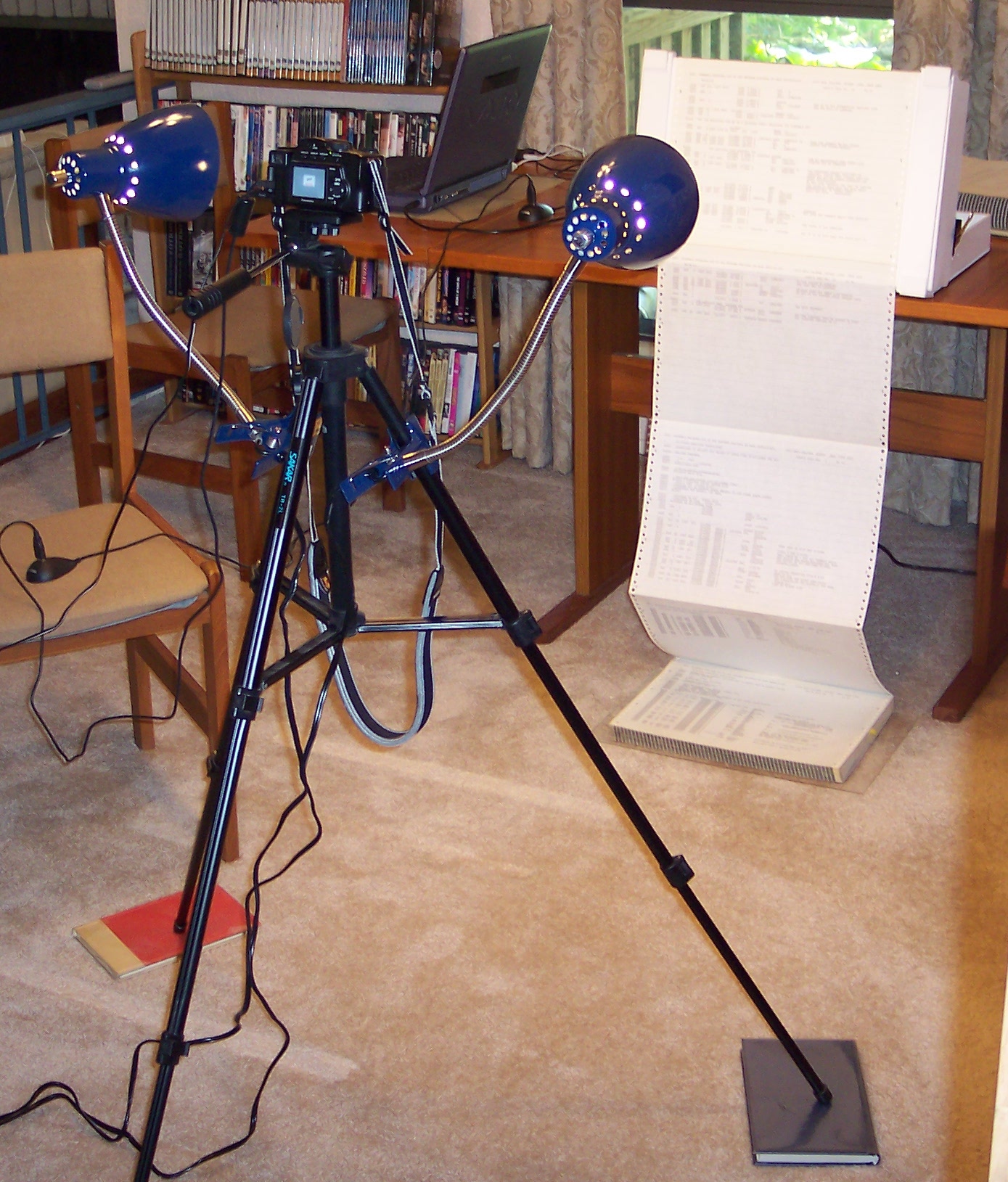
 If you ship documents or
AGC program listings to me, I will digitize any that aren't
already online, and then return the originals to you—or to a
museum, if you would prefer. Inquire by email about a
physical shipping address. I can defray the shipping
cost, if requested.
If you ship documents or
AGC program listings to me, I will digitize any that aren't
already online, and then return the originals to you—or to a
museum, if you would prefer. Inquire by email about a
physical shipping address. I can defray the shipping
cost, if requested.